Shopify go live: an Australian launch checklist
Card fees of 1.75 % + 30c start on day one: go live on Shopify in Australia when one real buyer pays in AUD, gets a tax invoice and a tracking number.

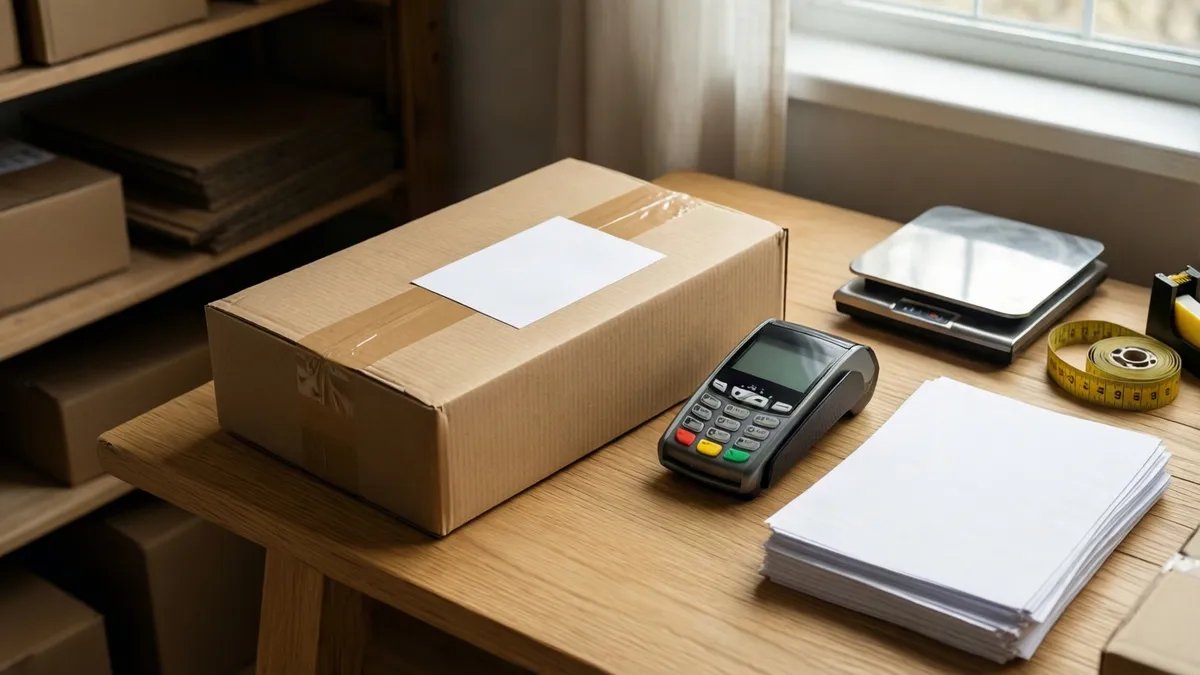
The short answer: A Shopify store is not live when the password comes off. It is live when one real Australian customer can pay in AUD, receive a GST-compliant tax invoice and get a tracking number. Everything before that is setup; everything after is a distraction. Work through a custom domain, payment providers out of test mode, and postage rates for metro and regional postcodes. Match GST settings to your ABN, complete the legal pages, then place one real paid order on your phone. The first sale carries real numbers: Shopify's Australian pricing page lists a specific online card rate for the Basic plan. And the returns page is launch-critical, because the Australian Competition and Consumer Commission treats 'no refunds' policies that deny consumer guarantees as illegal.
What we measured: We read the 12 ranking pages for this search in full; 2 more could not be read. We compared what each page treats as the launch gate, and which plumbing gets covered. Of the 12, 6 cover connecting a custom domain, 6 cover moving payment providers to live mode, and 6 cover shipping zones. Prices quoted across those guides run from about $2 to $799 with a median near $99, based on multiple price mentions. Two pages stayed unread and prices were quoted in guides rather than live listings, so that band is softer than it looks.
Most people searching 'shopify how to go live' have already built the thing. Theme chosen, products loaded, password page holding the door. What's missing is proof: nobody has handed over real Australian money yet. The full build sits in Shopify Australia: set up your store step by step; this checklist starts where that one stops. (Still weighing up the platform? Try what Shopify is and how it works in Australia first.)
Shopify plans, pricing and features change; always verify the current details on shopify.com before deciding.
How to go live: your gate is one paid order
Here is the whole test: a completed order from a real Australian card, paid in AUD, with a tax invoice and a tracking number at the end of it. Not a green tick in a checklist app. Until that transaction works end to end, you are in setup, and every item below exists only to carry it.
Sequence matters. Our suggested launch order, ready to copy into your notes:
- Point your own domain at the store so the checkout URL is yours.
- Move every payment provider out of test or sandbox mode.
- Load postage rates for metro and regional zones.
- Switch GST on or off to match your ABN status, then check the tax invoice.
- Publish privacy, returns and contact pages.
- Buy your own product on your phone and let every email run.
One habit to skip. In the merchant threads we read, the recurring confession was staring at the Live View map all day, one commenter calling it time you're "just wasting" outside of Christmas. The transaction is the gate; the visitor dots are not.
Point a custom domain at Shopify first
For a first store, the deciding trait is trust: buyers read the checkout URL before they read your copy, and a myshopify.com address on a payment page reads as unfinished. Add the domain in admin, change the DNS records at your registrar, and give it a few hours rather than launching on launch minute.
It goes first for a practical reason too. Payments, emails and GST settings all hang off the domain you keep, so setting it last means rechecking work before the one paid order that counts.
Switch payments to live and price the fee
For a first store, the deciding number is the per-transaction fee, not the plan price. The plan is fixed; the fee rides every sale you actually win.
Heads up: this guide uses Shopify affiliate links. Sign up through one and we are paid a commission, and you pay exactly the same as you would otherwise. Now the number: Shopify's Australian pricing page, checked on 6 August 2026, specifies a standard online card rate for the Basic plan. This represents a specific amount for a sale of that size.
Then the step sellers actually miss: opening the payment providers page and moving each provider to live. Test mode fakes payments, and a password-protected store can still hold live payment settings, so check the mode yourself instead of trusting a tick.
Three ways a first customer can pay you:
| Payment method | Transaction fee | Payout timing | AUD settlement | Best for | The catch for a new store |
|---|---|---|---|---|---|
| Shopify Payments | 1.75 % + 30c online on Basic (Shopify AU pricing, checked 6 August 2026) | Automatic payouts on the schedule you set in admin | Direct to your bank | A first store taking AUD cards | Rates change as you change plans |
| PayPal | Set by PayPal Australia per payment type; no single rate | Sits in your PayPal balance until you withdraw | Via withdrawal | Buyers who won't type card numbers | A second balance to reconcile at BAS time |
| Afterpay | Merchant fee per order, set in its merchant terms | Settles per its merchant agreement | Direct per its agreement | Bigger carts where budget stretches | A fee per order bites on small sales |
PayPal and Afterpay publish their own Australian fee pages; check each page before you commit because fees vary across payment types. One more reason not to improvise anywhere in this chain: Shopify's PCI checklist (2024) notes that the card-industry standard has recently been updated to a new version. (2024). Card companies may fine non-compliant merchants US$5,000 to US$500,000 a month. A certified gateway keeps card data out of your hands. That is the entire point.
Our take: Our call is that a new Australian store launches on Shopify Payments alone. It should add PayPal once it can afford the extra reconciliation. This is because two payout streams before your first BAS is bookkeeping you haven't earned. Afterpay waits until the margin maths on your average cart is done: a per-order fee feels different on a A$25 sale than on a A$180 one.
Set postage rates that match the courier
The deciding gap is metro versus regional. A parcel to a capital-city postcode and one to a remote community cost different money, and a flat rate quietly makes one customer subsidise the other. Build zones the way Australia Post and Sendle price, then check every rate against the carrier's own rate card for your lodgement postcode. They publish those rates and they move; we don't reprint them here.
We walk through the Australia Post setup in Set up Australia Post shipping in Shopify, and zone logic beyond the capitals in Shopify shipping zones Australia: postage beyond capitals. Fulfilment is half the gate: the paid test order only counts once it ends in a tracking number.
Make GST settings and tax invoices match your ABN
The GST you collect is not your revenue. It's the Australian Taxation Office's (ATO) money resting in your account until the business activity statement is due, and stores that mix the two get a shock in their first quarter.
In admin, set GST at 10 % for Australia and enter your ABN so tax invoices carry it. The ATO sets what a valid tax invoice must show, so check its guidance rather than trusting a template. Not registered for GST yet? Then stop Shopify adding it: registration turns on your turnover, the ATO writes those rules, and charging tax you can't charge is a compliance problem, not a setting.
The fuller walkthrough lives in GST on your Shopify store: an Australian guide. This is a launch check, not tax advice; your accountant signs off, not us.
Publish the legal pages an Australian buyer expects
A refund is part of the same transaction as the sale, so these pages are launch blockers under our gate, not decoration.
Australian Consumer Law writes your returns page for you. The Australian Competition and Consumer Commission (ACCC) states plainly that 'no refunds' policies denying consumer guarantees are illegal.
You cannot send a customer off to the manufacturer with a problem. A major fault means the customer chooses a refund or a replacement, paid back the way they paid. Its repair, replace, refund guidance, Australian Competition and Consumer Commission, 2026, is the wording to copy. Scale matters too: the National Retail Federation's 2025 figures, published through Shopify's returns research, put brand losses near 16.9 % of annual sales.
Privacy next. Under the Privacy Act 1988, the Office of the Australian Information Commissioner counts a small business as one with turnover of A$3 million or less. Most sit outside the Act, but the covered ones answer to the Australian Privacy Principles. You hold names and addresses either way, so the page should say what happens to them. About and contact come last: a real address, and a form a stranger could actually use.
Test go live day on your phone
Close the laptop. The gate has to clear on the device your customer holds, so run the whole pass on your mobile and buy your own product at full price with a real card. Proving the store costs less than a launch week of broken checkouts. Then sweep the edges:
- Confirmation email arrives, tax invoice attached, ABN showing.
- Fulfil the order and check the shipping email sends, with a tracking number that resolves.
- Create a discount code and watch it actually reduce the total.
- Click every footer link, socials included; dead icons are worse than none.
- Uninstall the apps you can't name a job for. We cost the common ones in What Shopify apps really cost you in AUD.
- If you run an email tool, check the signup form feeds it, and switch the abandoned-cart flow on the same day: the Baymard Institute, 2024, documents an average online cart abandonment rate of 70.19 %, so the flow earns its keep from the first sale.
Last, kill the placeholder products and rewrite anything a supplier wrote for you. In the threads we read, the repeated sneer at new stores was recycled stock copy and imagery, indistinguishable from the next one. Real descriptions and your own photos are the cheapest differentiation available.
Frequently asked questions
How long after I remove the password will Google show my store?
Nobody publishes a measured timeline for a new .com.au, and we won't invent one. For scale, Google dominates the vast majority of global search referrals compared to Bing, so Google's crawl is the clock that matters. In the threads we read, the warning was consistent: SEO is a months-long burn, not a launch-week lever.
Can I schedule my Shopify store to go live automatically?
We found no built-in scheduler: going live is you removing the password page, and it happens instantly. Plan to be at the keyboard with the test order already done, not on a timer.
Do I need an ABN before I can launch?
Shopify doesn't ask for one; your tax invoice does. Get the free Australian Business Number from the Australian Business Register before your first sale, and treat GST registration as a separate step with its own turnover threshold. The ATO sets that threshold, not Shopify.
What if a real customer's payment fails on launch day?
The order won't appear, and the customer sees an error you can't fix mid-session. Check the providers weren't left in test mode, ask the buyer to retry or pay another way, then look in abandoned checkouts, because a failed payment often leaves one behind.
Should I go live on a particular day of the week?
No evidence names a lucky day, so pick the morning you can watch the shop. A weekday morning AEST beats a Friday night: your first orders arrive while you are awake, couriers and payment support are open, and you can run the phone test above on a quiet mind. Avoid launching and then leaving for the weekend.
Sources
- Shopify Inc., Australian pricing page. https://www.shopify.com/au/pricing — checked on 6 August 2026
- Shopify Inc., "PCI Compliance Checklist: Meet PCI DSS Requirements". https://www.shopify.com/enterprise/blog/pci-compliance-checklist — checked on 12 September 2026
- Shopify Inc., "What is Buy Online, Return In-Store (BORIS): How it Works & Examples". https://www.shopify.com/enterprise/blog/buy-online-return-in-store — checked on 12 September 2026
- Australian Competition and Consumer Commission, "Repair, replace, refund, cancel". https://www.accc.gov.au/consumers/problem-with-a-product-or-service-you-bought/repair-replace-refund-cancel — checked on 12 September 2026
- Office of the Australian Information Commissioner, "Small business". https://www.oaic.gov.au/privacy/privacy-guidance-for-organisations-and-government-agencies/organisations/small-business — checked on 12 September 2026
- Baymard Institute, "Ecommerce UX Research & Best Practices". https://baymard.com — checked on 12 September 2026